How Do AI Tools Decide Which Businesses to Recommend?

Nick Kassotakis
Founder, Calux · 18 May 2026
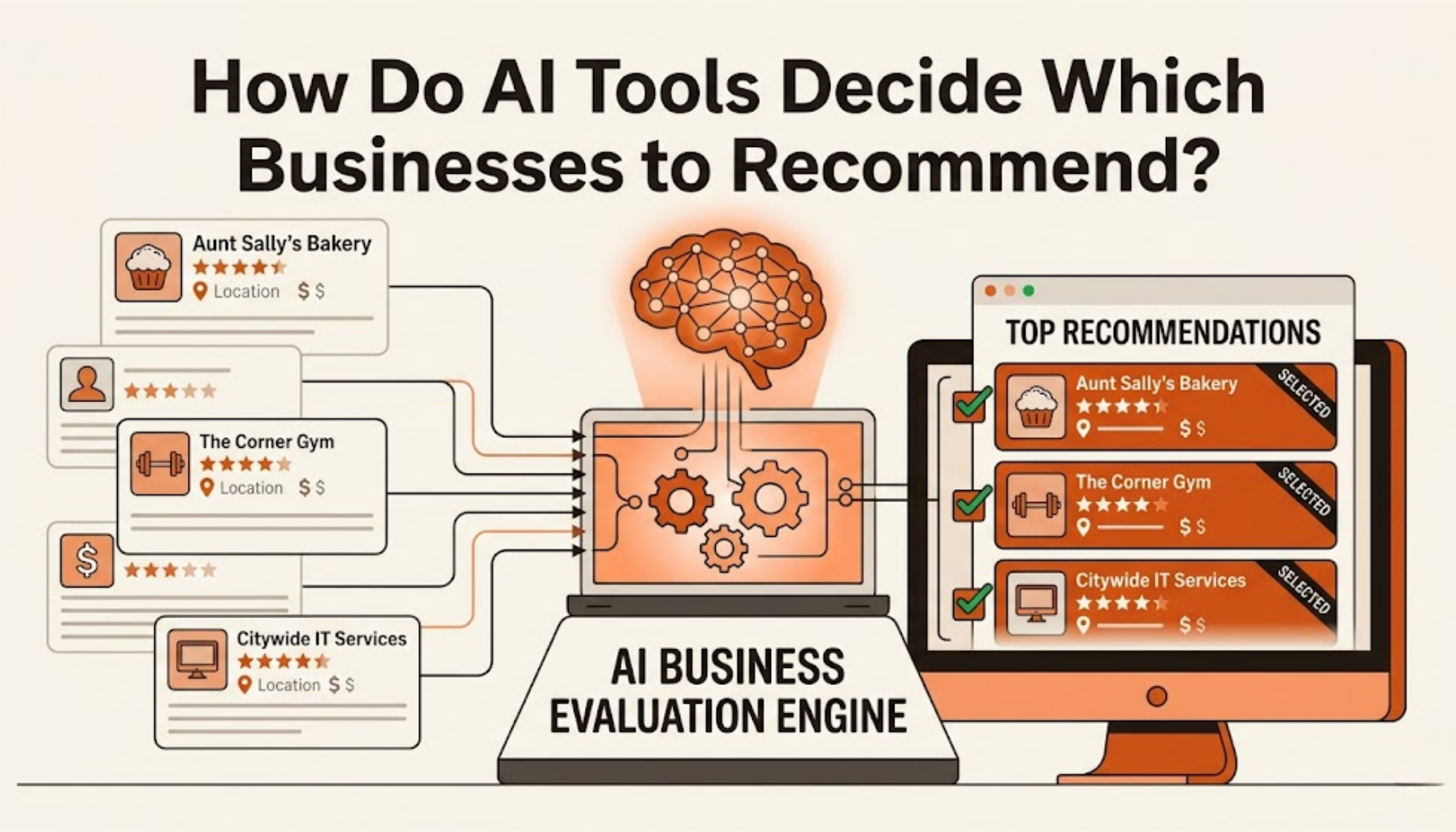
Millions of people now skip Google entirely. They type their questions directly into ChatGPT, Perplexity, or Gemini and trust whatever those tools say. If your business only optimized for Google, those people cannot find you — and the gap is bigger than most business owners realize.
Google rankings and AI search citations are almost completely separate systems. Research shows the top-ranked page on Google appears in only 46% of AI-generated answers, meaning most AI responses actively exclude the pages Google considers most authoritative. Ranking first on Google does not mean AI tools recommend your business. The rules are different.
Google and AI Search Engines Play by Different Rules
Only 20–26% of AI-generated answers overlap with Google's top 10 organic results. Even Google's own AI feature regularly skips its own top-ranked pages. The top-ranked page was absent from 54% of desktop AI-generated answers and 66% of mobile ones. One in four AI answers contains zero results from the top 3 ranked pages — meaning even if you dominate the top three positions on Google, there is a 25% chance the AI ignores all of them.
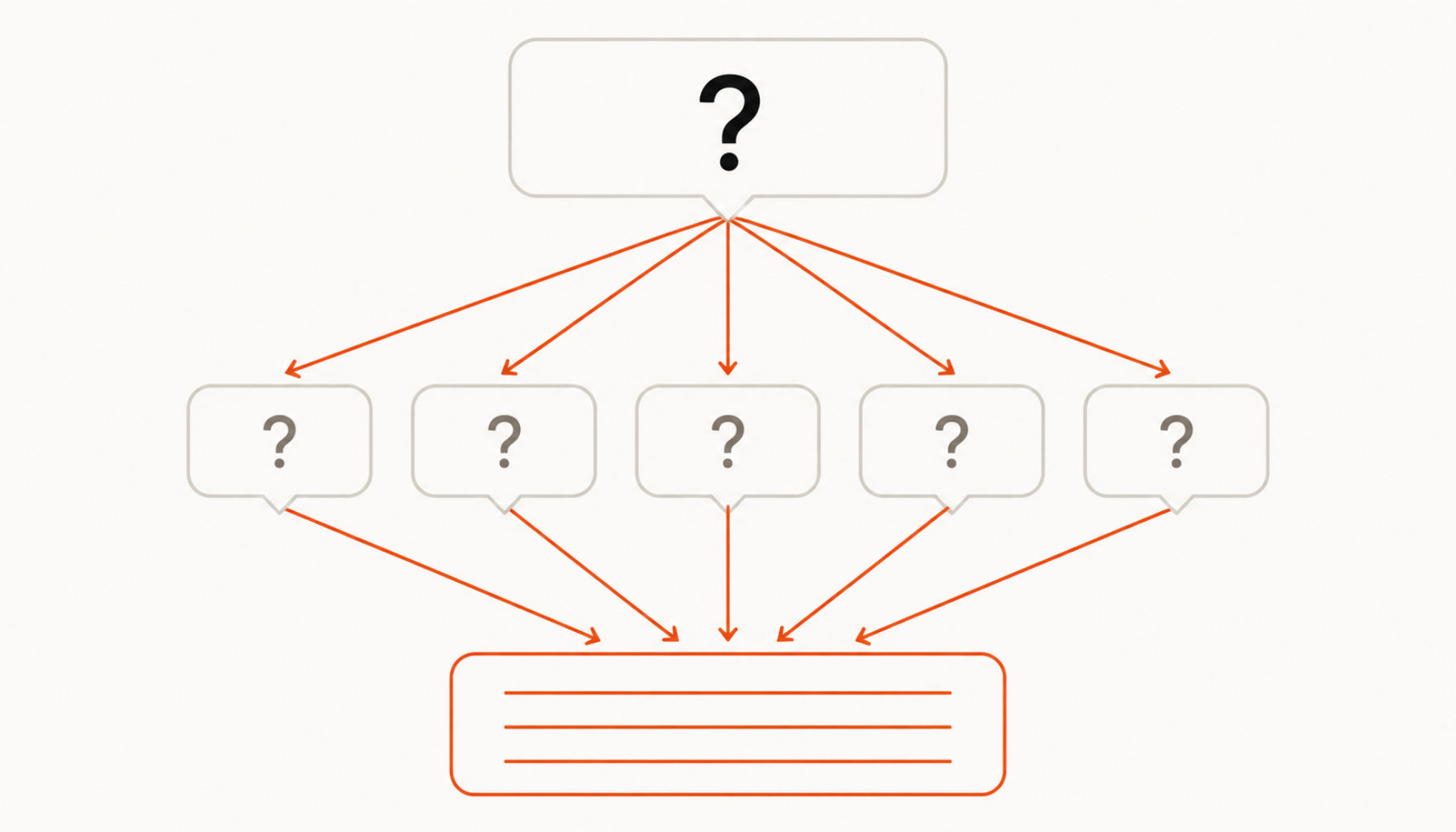
The reason is something called query fan-out. When you type a question into an AI tool, it does not search for your exact words. It breaks your question into many related sub-questions, searches each one separately, and merges the results into a single answer. A page that ranks first for "best accountant in London" might not rank at all for the ten related sub-questions the AI also runs: "how do London accounting fees compare?", "what qualifications should an accountant have?", "what is the average cost of a small business accountant UK?" Each of those sub-questions pulls from different pages. Your page needs to address all of them — not just the headline keyword.
There is also a timing factor. AI-generated answers are most commonly triggered by specific, research-style questions rather than broad, high-volume keywords. Queries with under 50 monthly searches trigger AI Overviews 33% of the time, while queries with over 100,000 monthly searches trigger them only 0.23% of the time. The prospects who are closest to making a buying decision — the ones typing specific, researched questions — are the exact audience AI is answering.
Nearly 30% of marketers already report declining search traffic as buyers shift to AI tools. This is not a future trend. It is happening now.
What Actually Gets Your Business Cited in AI Responses
Researchers at Princeton, Georgia Tech, and IIT Delhi ran the first systematic study of what content changes affect AI search visibility. They tested nine strategies across thousands of queries and validated the results on Perplexity. The results contradict everything traditional SEO taught us.
Put real statistics in your content
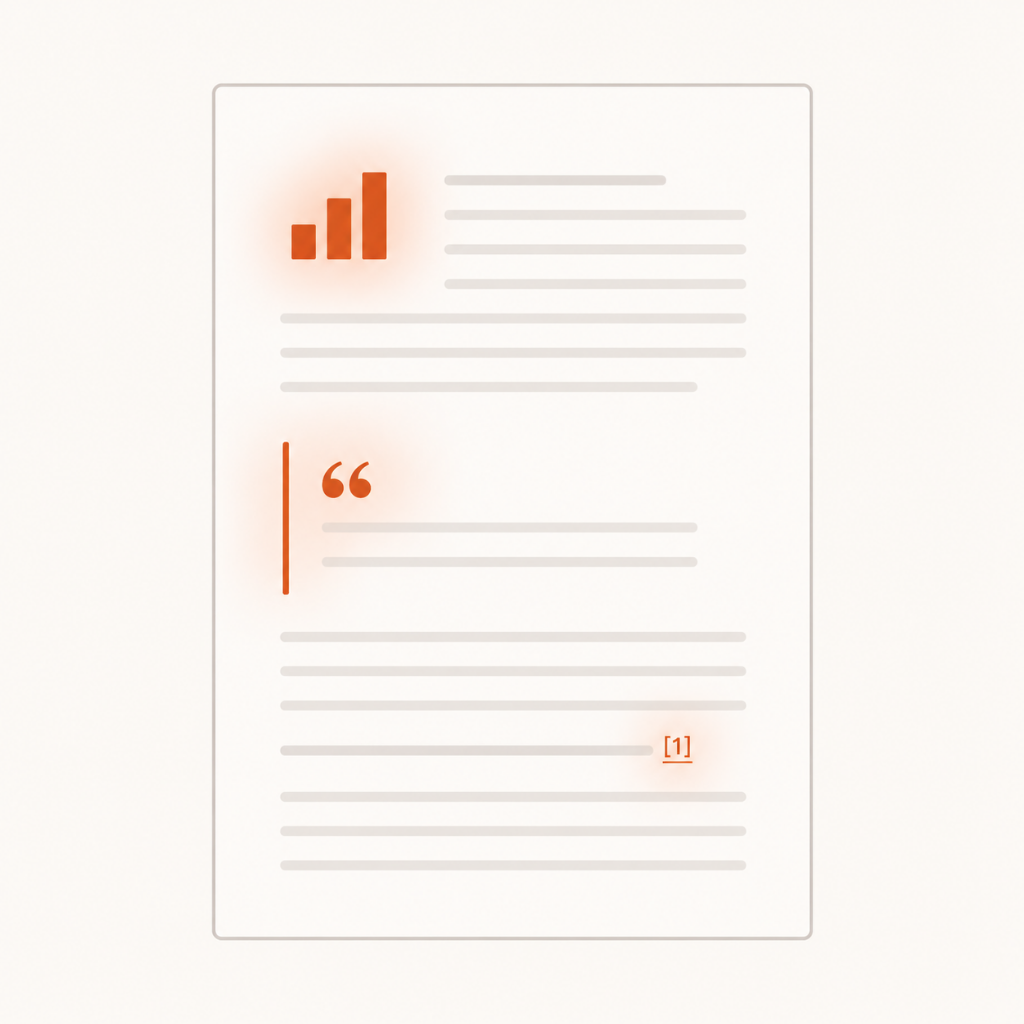
Adding quantified, sourced statistics to a page increased AI citation visibility by 31% — rising to 37% when validated on Perplexity.
What this means in practice: replace qualitative claims with specific numbers. Instead of "many businesses struggle with cash flow," write "62% of small businesses cite late payments as their primary cash flow problem, according to [Source]." AI engines extract and cite precise, attributed claims. Vague assertions get skipped.
Quote credible sources directly
Adding direct quotes from recognized sources produced the largest single improvement of all nine strategies tested — 41%.
If an industry body, regulator, or recognized expert has said something relevant to your topic, quote them with their name, title, and organization in the same paragraph. AI engines build their answers from attribution chains. If your content cites credible authorities, AI tools use your content as the bridge to that authority. Combining quotes with statistics averages 31.4% improvement — the two compound each other.
Write in plain language
Improving fluency and readability boosted AI visibility by 27%; simplifying vocabulary added a further 14%.
AI tools pull sentences directly from your content to build answers for real people. If your writing is dense, full of industry jargon, or structured for search bots rather than readers, the AI cannot turn it into a clear, citable answer — so it moves on to a page it can use.
A practical test: read a paragraph aloud. If you would not say it that way in conversation, rewrite it.
Cover every angle of the topic
The query fan-out mechanism means AI tools simultaneously search for 10 to 20 related sub-questions. A page that only answers the main question gets cited for one sub-query at most. A page that answers the main question and anticipates what a reader would ask next gets cited across many sub-queries.
After writing your main answer, list every follow-up a real person might have and answer those too. What does this cost? How long does it take? What can go wrong? Who should I compare you against? This is the structural difference between thin content and content that earns AI citations at scale.
Smaller sites benefit more than large ones
A website ranked 5th on Google that adopted citation-based optimization saw a 115% improvement in AI visibility — more than double the improvement seen by top-ranked sites.
Traditional search engines reward authority accumulated over years through backlinks and domain age. AI engines reward the quality of the content itself. A small business with a well-cited, clearly written, comprehensive page can outperform a large corporation's generic content. The playing field is more level than it has been in two decades.
The One Thing That Kills Your AI Search Visibility
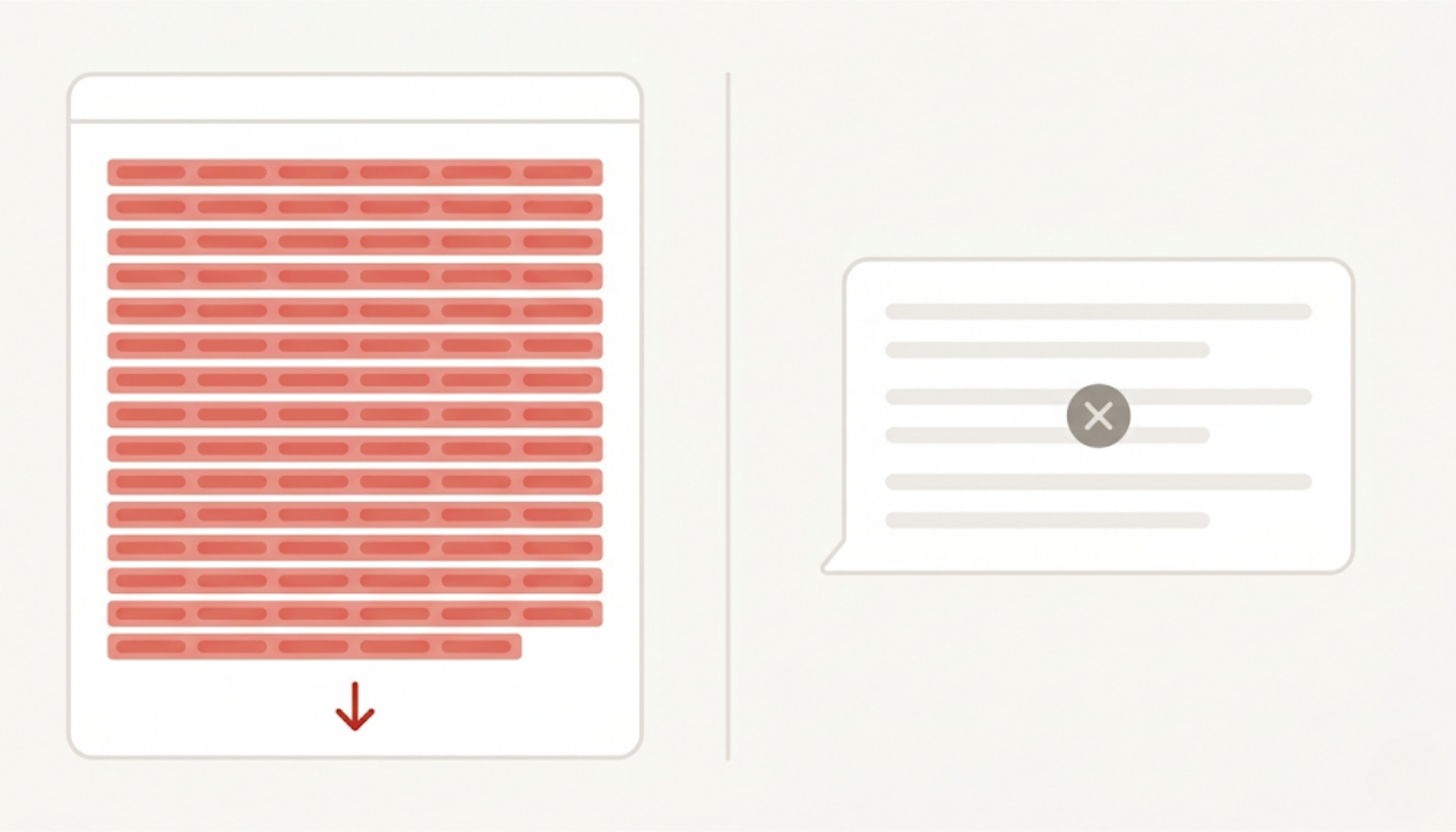
Keyword stuffing — repeating target keywords throughout a page to influence rankings — produced a 10% decrease in AI citation visibility. The same result was confirmed independently when tested on Perplexity.
This matters because keyword density was a core tactic in traditional SEO for 20 years. Search engines historically ranked pages partly on how often a keyword appeared. AI engines understand meaning rather than pattern-matching on words. A page that repeats "best plumber North London" forty times reads as low-quality filler to an AI engine, and it is treated accordingly.
Every business that followed old-school SEO keyword advice is now carrying a handicap in AI search. Cleaning up over-optimized content — reducing keyword repetition and replacing it with substantive answers — is one of the fastest improvements available.
Does ranking first on Google guarantee I will appear in ChatGPT or Perplexity?
No. The top-ranked page was absent from 54% of desktop AI answers, and 25% of AI answers contained no results from the top 3 ranked positions at all.
The core reason is query fan-out. When someone types a question into an AI tool, it generates many related sub-questions and retrieves results for each one separately before merging them into a single answer. A page that ranks first for your original question might not appear at all for those sub-questions. Dominating one query is no longer enough. Coverage of the full topic is what earns consistent AI citation.
Does this mean traditional SEO is no longer worth doing?
No. Traditional search still drives the majority of web traffic. Specific, research-style queries with under 50 monthly searches trigger AI Overviews 33% of the time — but the broader universe of commercial keywords still runs through traditional search results. The two channels are complementary, not competing.
There is also a practical side effect: content that earns AI citations tends to perform better in traditional search too. Adding real statistics, citing credible sources, and writing clearly are signals that search engines have always valued. Optimizing for AI search raises the quality bar for all channels simultaneously.
How do I know if AI tools are currently mentioning my business?
The most direct method is manual testing. Type the questions your customers actually use into each AI assistant and check whether your business or website appears in the response. Start with queries like: "Who are the best [your service] providers in [your city]?", "How much does [your service] cost?", or "What should I look for when choosing a [your service] provider?"
Run the same questions across ChatGPT, Perplexity, Gemini, and Copilot and record the results: query, AI tool, cited or not, position in response. Repeat this monthly. AI tools update their indexes and models regularly — a snapshot from three months ago may not reflect your current standing. Calux tracks this automatically and includes it in the monthly AEO report.